Bayit Miklot: A Place to Call Home
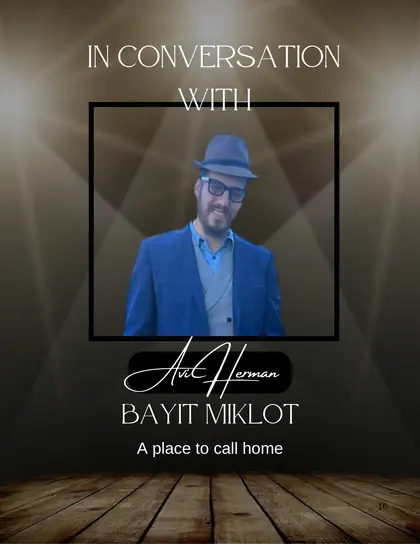
In conversation with Avi Herman
By Rivkah Esther with Avi Herman · March 2026 · pages 15-19
 See it in the magazine
Q. What is the story behind Bayit Miklot?
A. Bayit Miklot, Home of Refuge, was born because I couldn’t take it anymore. Burying friend after friend: overdoses, suicides; watching them slip away while I kept cycling through facilities that “fixed” me just enough to send me back out alone. Clean for a minute, then the isolation hits hard. Drugs weren’t the problem; disconnection was. I was sick of it. Sick of the losses. Sick of the revolving door. Johann Hari nailed it: “the opposite of addiction is connection”.
So, after sober living, I got my own place and started doing the only thing that made sense, opening the door. Fridge stocked with drinks and nosh, board games out, couch ready. Come hang if you’re overwhelmed. If things are dark, crash here, no questions. There wasn’t some grand plan; I was always the guy inviting people over, but this time it was survival. Friends came. Strangers in crisis came. Hangouts turned into lifelines. One home became several, neighborhood families helped by boarding a few of our girls, for safety. It grew from there, because the need never stops.
We began as more of a Jewish-focused endeavor: Shabbat meals, Torah if people wanted, kosher food, acts of kindness, because that’s what grounds me and heals so many. But pain doesn’t check religion at the door, so neither do we. We’re open to young adults (20’s-50’s) fighting addiction, mental health hell, trauma, homelessness, anyone. Shabbat and kosher are here because they build real belonging for a lot of us, but nothing’s forced. Participation is your decision.
This is the home I wish existed when I was drowning. The one I’m still fighting to build bigger, because no one should have to bury more friends or face the darkness alone.
“The opposite of addiction is connection.”
Q. What are the different services offered?
A. Right now it’s me, limited cash, and whatever I can pour in. But it’s real support for people who need a restart. Currently, we have mostly young men in our homes, with a few girls boarded with neighborhood families (we’ll have women’s homes, with female staff, when we can expand. It’s not right for me to be around too much). Below are a few of the highlights:
- Safe Transitional Housing: 3+ homes with up to 19 residents at the peak. We’re not taking new intakes currently, while I stabilize, expand and am helping current residents step up.
- 24/7 Open Clubhouse (my place): Drop in anytime: food, drinks, games, puzzles, quiet couch, ear to listen. Mixed space for when isolation bites.
- Weekly Group Therapy: I run it with a simple process: “How was your week?”, “What do you need from me or the group?” I give people the space to be honest and ask for help.
- Shabbat & Community: Friday meals with hot kosher food, game nights, social activities to feel connected.
- Practical Help: Job leads, therapist connections, getting integrated back into life.
Kosher and Shabbat rhythms for those it helps, which are voluntary, always. It’s a small operation at the moment, but it’s saving people one day at a time.
Q. Any hashgacha/inspirational stories you can share?
A. One that still wrecks me: Last February, Rabbi calls, “Avi, a 33-year-old Jewish guy in a Fort Worth rehab is struggling hard. Can you go?” I drive over. They bring this broken, disheveled man with empty eyes. We talk. He says, “I know you”. I didn’t think so, but as we exchanged numbers, I realized… he’s already saved in my phone from over a year ago.
So I asked him, “Do you remember 09/28/23”, my day, the day I went to rehab? I was in a parking lot at a Caron facility in PA with cold feet, telling my brother and friend, “I’m out”. The phone rings: it’s him, a complete stranger, or so I thought at the time. “I heard from a mutual friend, you’re checking in today. I just finished myself and I live close by if you need anything, call and I’ll come over.” He talks me down for 20 minutes. I turned around and went inside.
That call saved my life.
A year and a half later, he’s the broken one and I’m there for him. We hug, cry on each other’s shoulders. Three weeks later he joined Bayit Miklot. Now 6 months later and he has a job and is setting up an apartment. And it turns out this same guy had been trying to win my business in a professional capacity for over 15 years. I’d literally been ignoring his emails for that length of time.
If we had met then, while we were both still using, we’d likely be dead. God knew the timing. A stranger saved me… really, set him up to save himself later.
That’s the pattern here. People show up shattered, stay through therapy, meals, clubhouse, get jobs, and mentor the next in line. Quiet flips from despair to purpose.
Q. What accomplishments/inspirational milestones are you hoping will happen at Bayit Miklot in the next 5 years?
A. Texas is the pilot program. We want to grow it so we never have to turn anyone away, then train others to replicate the model in other areas, both nationally and internationally. Our immediate attention will be focused on:
- Women’s Transitional Housing: with female staff and dignified spaces.
- 24/7 Crisis/Call Center: to talk with people in need and connect individuals with resources and facilities that best meet their individual circumstances.
- Robust PHP/IOP ~30 min from Dallas: day treatment, vocational tracks, therapy.
- Large Central-Texas Property: to create the true vision for Bayit Miklot, which will offer residential facilities, animal therapies, such as horses, dogs and a petting zoo. We’ll also have gardens to tend, for grounding and productivity.
- A Bigger Clubhouse in Dallas: with more space for engaging activities, rooms for group therapies, family-style meals, as well as family/community education rooms for connectivity and networking.
- App for Clients/Alumni: to facilitate care, mentorship, group chats, videos, discussions, staff check-ins, etc.
We’re here to take the most challenging cases. We have compassion and confidence that with the right therapies, community and proper assistance, everyone can succeed. The drive exists; we want to turn the hardest stories into the strongest comebacks. Every soul gets a home.
Every soul gets a home.
Q. How can people get involved?
A. Right now, two things would change everything:
- Connecting people who need this: share our story, tell anyone in crisis. Text or call me anytime if someone’s struggling.
- Donations: I’ve poured my heart and finances into this organization, but I need your help to keep the doors open and grow the organization. Resources are used for homes, services, staff and expansion. Visit our website at bayitmiklot.com to help our cause. Every dollar is appreciated and keeps our doors open longer.
Other ways:
- Volunteer: Meals, game nights, mentoring, future vocational help, reach out via email to get involved.
- Partner: Therapists, job folks, funders, reach out.
Q. Who do you turn to for guidance?
A. Rabbi Bentzi Epstein. He’s been a guiding force in our organization and ensuring we all remember our moral and ethical responsibility to those we're working to assist.
To connect, please reach out: info@bayitmiklot.com, 917.676.2014